
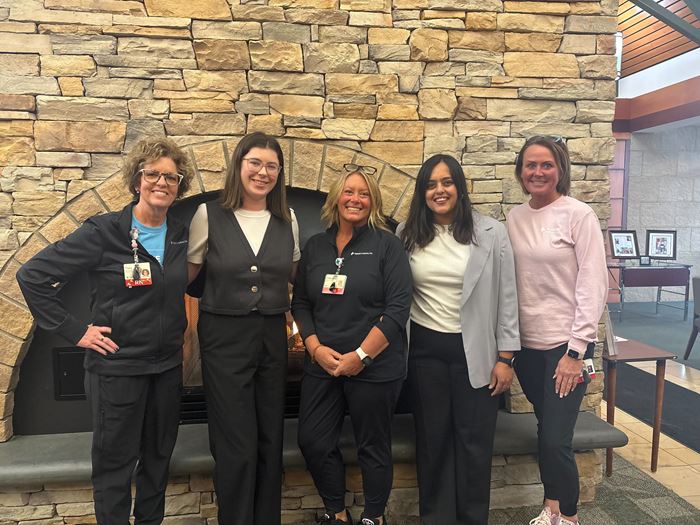
Mercy Health – Springfield Cancer Center and Mercy Health – Urbana Cancer Center are participating in a clinical trial, making them the first in the area to offer patients help addressing chemotherapy-induced peripheral neuropathy (CIPN).
“This is an exciting step forward in how we support patients through treatment,” said Lisa Gibson, Mercy Health – Springfield’s Director of Oncology. “Our goal is not only to treat cancer effectively, but also to reduce the burden of treatment whenever possible and help preserve quality of life along the way.”
CIPN is a common and potentially long-lasting side effect of cancer treatment that can cause numbness, tingling, pain, and weakness in the hands and feet. For many patients, these symptoms can interfere with daily activities, work, independence, and overall quality of life. Currently, there are limited options to help reduce the risk of neuropathy during chemotherapy.
“It is easy to overlook how much we rely on our hands and feet until neuropathy starts to interfere with work, independence, daily life, and the simple activities that help people feel like themselves. Preserving sensory and motor function during treatment could make a meaningful difference for patients,” explained Chaundra Foss-Blizard, BSN, RN, Oncology Clinical Research Nurse. “We are proud to partner with Luminate on work that not only advances care but also helps preserve function and support patients during treatment and into survivorship.”
Through participation in the IMPACT clinical trial, listed on ClinicalTrials.gov as The Lilac Device Trial (NCT07142304), Mercy Health is proud to offer its oncology patients access to the Lilac Glove & Boot device. Developed by Luminate, a medical technology company focused on supportive care in oncology, the device applies controlled compression to the hands and feet during treatment and is being evaluated for its potential to limit chemotherapy exposure to peripheral nerves associated with neuropathy.
“Peripheral neuropathy is a devastating side effect of chemotherapy, and often, cancer patients are not aware of it until it's too late,” said Lalita Kota, Director of Clinical Operations at Luminate. “Chemotherapy targets fast dividing cells in the human body, such as tumors. Because of how nerve cells behave, some chemotherapy drugs end up also targeting the nerves in the hands and feet, meaning patients often end up losing the part of their hand and feet function. With no solutions currently available in the market to prevent this issue, we’re incredibly excited to be bringing the Lilac device to patients in Springfield, Ohio.”
Eligible patients who choose to participate may be enrolled in a structured clinical trial experience that includes use of either the active compression device or a comparison device. This study design helps evaluate the technology while ensuring all participants receive close monitoring and supportive care throughout the process.
In addition to receiving treatment, participants contribute valuable information that may help improve supportive oncology care for future patients. Participation includes use of the study device during treatment visits, routine assessments, symptom tracking, and ongoing communication with the care team throughout the study. For more information about the program or to determine eligibility, patients are encouraged to speak to their oncology care team.
Mercy Health is committed to expanding access to advanced, patient-centered care close to home. Its Springfield Cancer Center has delivered comprehensive, compassionate care to help patients facing a cancer diagnosis for more than 20 years and the Urbana Cancer Center came online last year, expanding that access to even more patients. Whether you have already been diagnosed with cancer or are looking to understand your cancer risk better, Mercy Health offers an experienced team of oncology specialists ready to help. To learn more about our oncology services available, visit mercy.com.